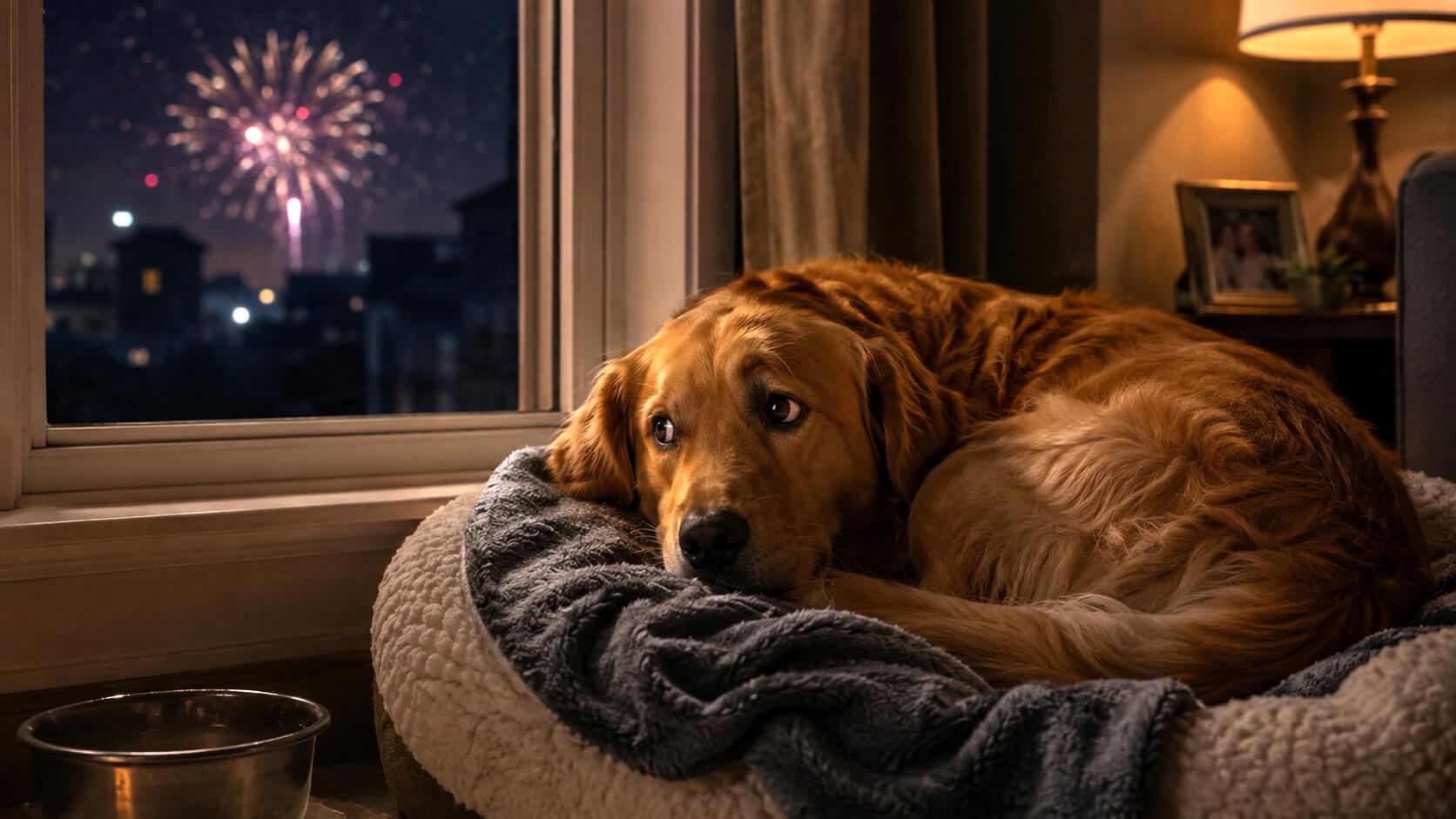
The 4th of July is almost here, which means three things are coming: backyard food, group texts about who’s bringing what, and at least one dog wondering why the sky has chosen violence.
For humans, fireworks are festive. For dogs, they are loud, sudden, and deeply suspicious.
Even a normally calm dog can panic when the noise starts. A dog who never runs may run. A dog who usually comes when called may not hear you. The point: fear changes the rules.
The good news: you do not need a dramatic plan. You need a boring one.
Boring saves dogs.
Here’s what to check before the 4th.
1. Make your dog easy to return
Start here: if your dog got out, could someone get them back to you quickly?
That means checking two things: the microchip and the collar tag.
Make sure your dog’s microchip is registered and connected to your current phone number, email, and address. If you moved, changed your number, adopted your dog from a rescue, or never personally registered the chip yourself, this is your sign to check.
Important reminder: a microchip is not a GPS tracker. It will not show you where your dog is. It helps if your dog is scanned at a shelter, vet clinic, or animal control facility.
The collar tag is the faster path home. Look at it like a stranger would: can they read your number, is the tag still secure, and is the phone number current? If someone found your scared dog on a sidewalk, would they know exactly who to call?
That is the goal: make the path home obvious.
One extra move: take new photos this week. Get one clear face photo, one full-body photo, and one that shows any unique markings. If you ever need to make a lost dog post, you do not want to be choosing between 47 blurry pictures of your dog looking like a haunted throw pillow.
2. Pick the room before the first boom
Do not wait until the fireworks start to decide where your dog should go.
By then, your dog may already be pacing, barking, shaking, hiding, or attempting to merge their entire body with yours.
Choose the safe space now.
Usually, the best option is an interior room away from windows, doors, crowds, and outside noise. A bedroom, bathroom, laundry room, closet area, or quiet den can all work. The right room is the one where your dog feels safest, not the one that looks best in your head.
Add familiar things: their bed, a blanket, water, and something calming if they are able to eat when nervous. A frozen Kong, lick mat, chew, or puzzle toy can help some dogs settle. White noise, a fan, soft music, or the TV can also help blur the sharpness of the fireworks.
The goal is simple: make the world feel smaller and less chaotic.
If your dog already likes their crate, use it. If they do not, this is not the week to suddenly introduce one and expect a holiday miracle. The right setup is the one your dog already trusts.
One more thing: if your dog is nervous, they do not need to participate.
They do not need to greet guests, pose for photos, join the barbecue, or be “socialized” through fireworks. Barking, hiding, freezing, shaking, panting, pacing, or clinging are not personality flaws. They are information.
Take the hint early. Give them distance, quiet, and permission to be unavailable.
3. Do the walk early
A walk earlier in the day can help your dog settle later, especially if it includes sniffing, gentle movement, and a little mental work.
Earlier is the important part.
Do not wait until evening, when your neighbors may already be testing fireworks like they are auditioning for a disaster movie. Get the walk, playtime, or training done before the loud part of the day begins.
Sniffing is especially useful. It gives your dog something to do with their brain and can be calming in a way that frantic exercise is not.
Also: do not overdo it. If it is hot, skip the heroic long walk. A stressed, overheated dog is not a calmer dog. They are just stressed and overheated.
Aim for satisfied, not exhausted.
4. Treat doors and gates like the actual problem
Fireworks are loud, but doors are how dogs disappear.
This is the part people underestimate.
The dog is inside. The plan is good. Everyone knows the dog is staying in. Then someone opens the front door for a guest. Someone checks the grill. Someone takes out the trash. Someone says, “It’s fine, he never runs.”
The 4th of July is not the night to trust “he never runs.”
Fear changes behavior. A scared dog can bolt through a door, push through a gate, slip a collar, dig under a fence, or squeeze through a space you did not realize counted as a space.
So make the house rule boring and clear: doors stay closed, gates stay latched, the dog stays inside, and the leash goes on before any necessary transition.
If people are coming over, tell them plainly: “Our dog is staying inside tonight.“ Be specific. “Please don’t open this door” works better than a vague “be careful.”
Also, skip the backyard hangout during fireworks. Even fenced yards can become escape routes when a scared dog is determined enough. A fence is not a safety plan. It is a fence.
5. Keep the late-night potty break boring
The fireworks may seem done. Your dog may seem calmer. You may be ready to declare the night over. Not so fast.
There can still be random late booms, and your dog may still be on edge. When you take them out, use a leash — even in a fenced yard if they are likely to startle.
Keep it short, supervised, and boring. Check the yard first if fireworks were going off nearby; debris, food scraps, skewers, alcohol, and other party leftovers can end up where dogs can reach them.
This is not the moment for a moonlit freedom sniff. This is business.
The quick checklist
Before the 4th, do this once.
Nothing dramatic. Just the small, useful things that make the night safer before the first boom.
|
✓
|
ID check Microchip registered and updated; collar tag readable, current, and secure. |
|
✓
|
Safe space Quiet room chosen, familiar comforts ready, white noise or TV available. |
|
✓
|
Early reset Walk, sniff, play, or train before the fireworks begin. |
|
✓
|
Door plan Doors closed, gates latched, guests warned, leash used for transitions. |
|
✓
|
Aftercare Leash for late-night potty breaks, even after the fireworks seem done. |
The bottom line: fireworks are not a character test for your dog.
They do not need to be brave. They do not need to “get used to it.” They do not need to understand why the neighborhood suddenly sounds like a movie trailer.
Your job is simpler: make it easy for them to stay safe, and easy for someone to get them home if they do not.
Update the ID. Pick the room. Close the door. Use the leash.
That is the plan.
And honestly? If your dog’s entire 4th of July strategy is hiding under a blanket and judging everyone’s life choices, they may be the smartest one at the party.


