
You head out wanting to give your dog a good walk, but ten minutes later you have barely made it down the block. There’s a patch of grass to investigate, then a tree, then another spot that apparently needs a very thorough sniff before anyone can move on.
If your dog loves to stop and smell everything, you have probably wondered whether you should just let them take their time or whether all that sniffing is getting in the way of the actual walk.
The answer is somewhere in the middle. Sniffing is not wasted time; it is one of the main ways dogs explore and understand their environment. But that does not mean every walk needs to move entirely at your dog’s pace.
Does a walk still “count” if your dog spends half of it sniffing?
Yes, a slow walk can still be a good walk.
Distance isn’t the only thing your dog gets from being outside. Sniffing lets them investigate their surroundings and adds sensory enrichment to the outing. It doesn’t replace every dog’s need for physical exercise, but covering fewer blocks doesn’t automatically mean the walk was less worthwhile.
There’s no set number of minutes. On relaxed walks, let your dog sniff generously, then mix in stretches of more continuous movement based on your dog’s age, health, energy level and what that particular walk is for.
Sniffing and walking do different jobs
Dogs experience a walk very differently from us. We notice where we’re going; they’re gathering information along the way. A spot another dog visited, an animal that crossed the path earlier or a smell carried into the grass can make an otherwise unremarkable corner worth investigating.
That exploration is useful enrichment. AAHA recommends sniff walks where dogs can explore at their own pace, while VCA distinguishes leisurely enrichment walks from brisker walks that provide more continuous cardiovascular exercise.
In other words, you don’t need to choose one or the other. Some outings can be mostly about exploring. Others can involve more sustained movement. And one walk can include both.
This is also why there’s no useful universal rule like “let your dog sniff for 10 minutes” or “a sniff walk replaces an hour of exercise.” Dogs differ enormously in age, health, fitness and activity needs, and there is no scientifically established conversion between minutes spent sniffing and minutes spent walking.
So instead of asking whether your dog is sniffing too much, try asking: what does my dog need from this walk today? Maybe it is more movement. Maybe it is a slower outing with time to investigate. Very often, it is a bit of both.
When should you wait and when should you move on?
If your dog is calmly investigating a smell, you’re somewhere safe and you have time, let them have it. You don’t need to interrupt every pause just to keep the step count moving.
But safety, exercise and real life still matter. If you need to get somewhere, another dog needs space or you want a portion of the outing to involve more continuous movement, it is perfectly reasonable to ask your dog to continue.
If your dog would happily stop every six feet, it can help to make the transition predictable rather than repeatedly pulling them away. Give them a little time, then use the same simple cue: “let’s go,” for example, and start moving. When they come with you, reward that choice with praise, a treat if you use them, or simply another opportunity to sniff farther along.
Over time, you can also use a cue such as “go sniff” when exploration is available. The exact words don’t matter; the useful part is helping your dog learn that sometimes they can investigate freely and sometimes you’re asking them to move with you.
One sniffing situation is worth watching more closely
Most ground sniffing on walks is simply a dog investigating a smell. But dogs can also sniff as an avoidance or displacement behavior when they feel uncomfortable. VCA notes that a dog faced with an unwelcome situation may suddenly focus on sniffing or digging the ground instead.
The difference is in the context. A relaxed dog wandering through grass with a loose body is very different from one who suddenly puts their nose down as another dog approaches while also becoming stiff, turning away or showing other signs of discomfort.
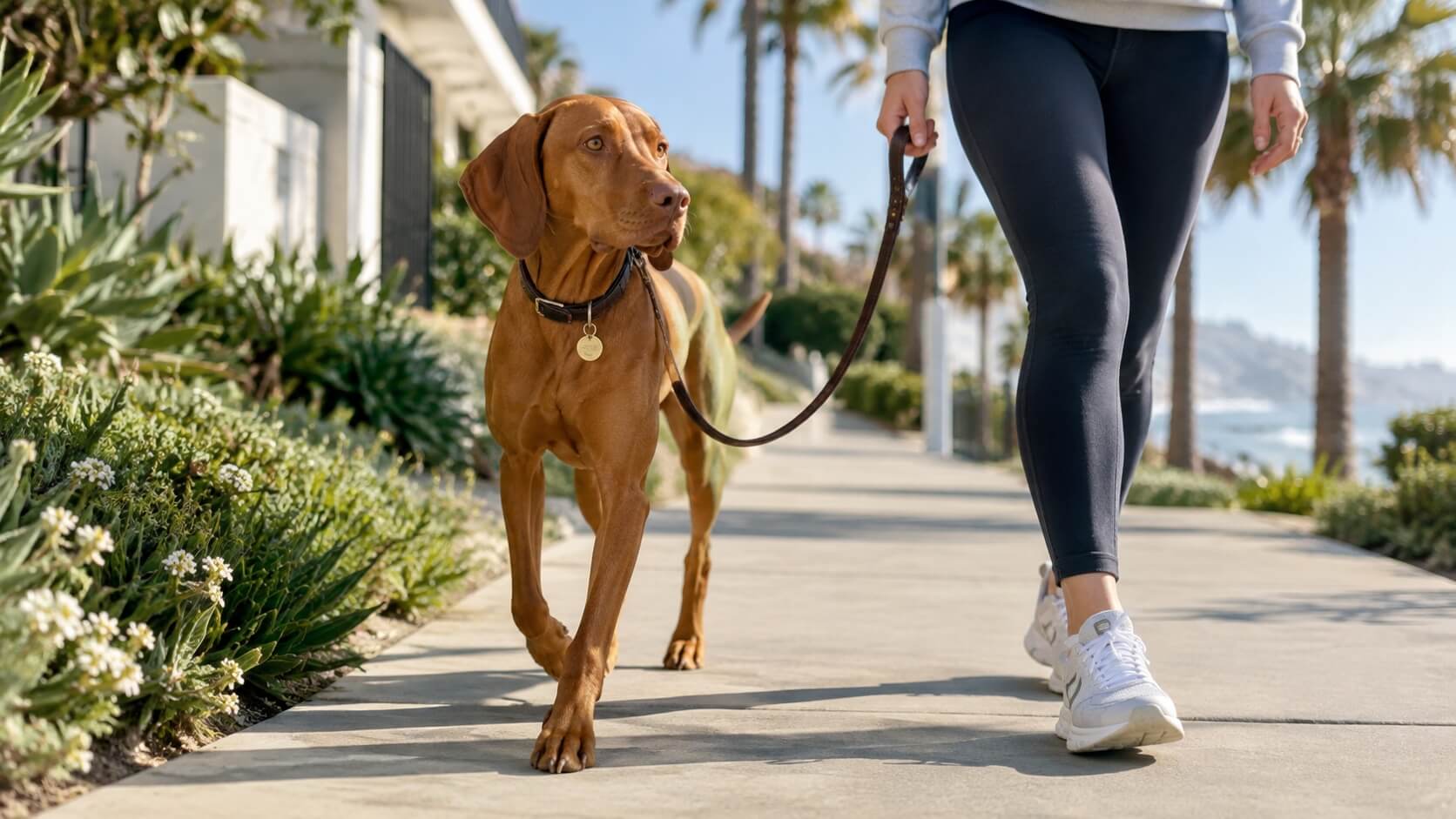
Try this on your next walk
You don’t need separate “sniff walks” and “exercise walks” every time you leave the house. An easy option is to build both into the same outing.
Try this
The Sniff → Move → Sniff Walk
1. Sniff: Start somewhere safe and give your dog time to explore without worrying about how much distance you cover.
2. Move: Use your walking cue and spend a stretch moving together at a comfortable, more continuous pace.
3. Sniff again: At another safe spot, give them another period of exploration before heading on.
There is no correct amount of time for each part. A young, active dog may benefit from more sustained movement, while an older dog may get plenty from a shorter outing filled with interesting smells. Adjust the balance to your dog, the weather and what you want that particular walk to provide.
On your next walk, try being a little more deliberate about both parts: give your dog time to properly investigate a few smells, then use your walking cue and move together for a stretch. You may cover less ground than usual, but that doesn’t automatically make it a less worthwhile walk.
Let them explore when you can. Ask them to move when you need to. A good walk has room for both.
Sources & further reading
AAHA: Enrichment: Supporting Your Pet’s Mental and Emotional Wellbeing at Home
VCA Animal Hospitals: Dog Behavior and Training — Play and Exercise
Applied Animal Behaviour Science: The Value of Sniffing: A Scoping Review of Scent Activities for Canines
VCA Animal Hospitals: Signs Your Dog Is Stressed and How to Relieve It


