
Worth Knowing
The Outing Test Every Dog Parent Should Know
How to tell the difference between “I want to be with you” and “I’m enjoying this plan.”
By August, taking your dog anywhere can require more equipment than taking yourself.
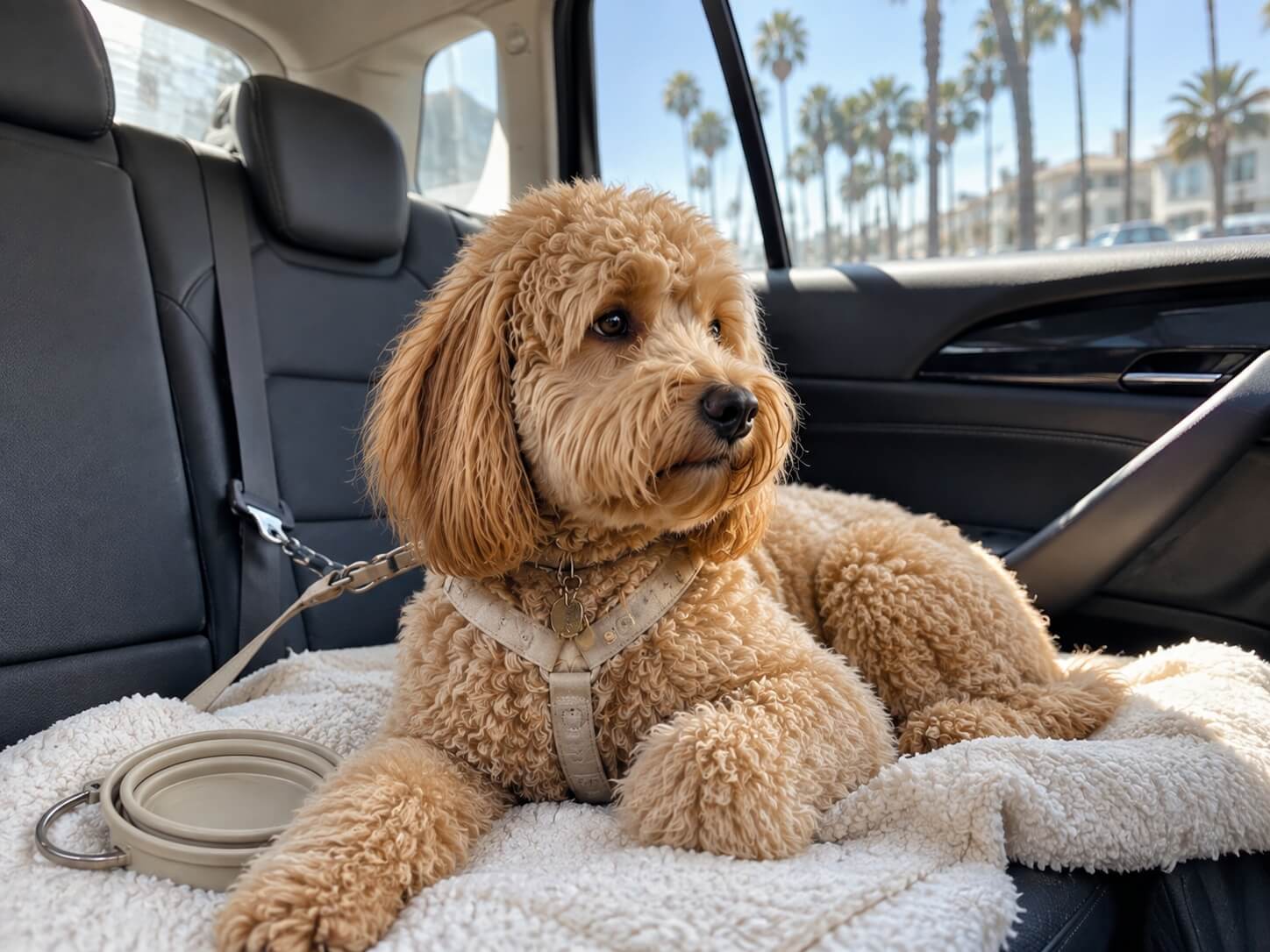
There is the collapsible bowl, the travel water, the seat-belt harness, the cooling mat, the regular treats, the emergency treats and the towel you bring because experience has taught you that clean paws are never guaranteed.
Your dog sees all of this happening and appears at the door: alert, wagging and positioned directly between you and any possible attempt to leave without them. Case closed, right?
Maybe. But your dog has not reviewed the itinerary. They know the shoes, the keys and the bag. They do not necessarily know that the plan includes a 40-minute car ride, a crowded patio, three unfamiliar dogs, a hot parking lot and a small child already shouting “DOGGY!” from across the street.
The distinction that matters
Your dog can want to be with you without enjoying everything you have planned.
The first yes
The leash only answers one question
Research suggests that your presence can help your dog feel safer in unfamiliar situations. But feeling safer with you nearby does not necessarily mean they enjoy the place itself.
A dog may choose a noisy brewery because being with you feels better than being left behind. That still does not make the brewery a good experience for them.
Running toward the leash only tells you they want to come. How they behave once you arrive tells you whether they are actually enjoying it.
Read past the wag
Excitement is not the same as comfort
Some dogs react to the possibility of an outing as if it is the best news they have heard all week.
They spin, bark, pant and rush toward the car before anyone is ready. But that burst of excitement does not always tell you how they will feel once the outing begins.
That excitement may be genuine, but it does not always mean your dog is comfortable. Panting, pacing, whining or repeated lip-licking can also signal stress, overexcitement or nausea.
Carsickness may show up as heavy drooling, unusual tiredness or vomiting. A dog can be eager to leave the house and still dislike the journey itself.
The clearest clue is what happens once the car is moving: do they settle, or become more uncomfortable as the trip continues?
Look for patterns, not one isolated gesture. Panting may come from heat, exercise, excitement or distress. A yawn may mean tiredness. Context, repetition and changes from your dog’s normal behavior matter.
The best test
Can your dog settle, and can they opt out?
A dog enjoying an outing does not need to lie quietly under the table the entire time. They may sniff around, watch people and check beneath nearby chairs for dropped food.
What matters is whether they can move between engagement and rest. Can they look at something and then disengage? Can they explore and then pause? Can their body come back down after the excitement of arriving?
Quiet is not always the same as calm. The dog lying silently beneath the table may be having an excellent nap or holding themselves completely still because the space feels overwhelming. Look at the whole dog: muscle tension, eyes, ears, breathing, willingness to move and whether they can turn away from what has their attention.
Dogs often show discomfort quietly before making it obvious. Turning away, leaning back, hiding behind you or trying to move farther away are all ways of asking for space. When those signals are repeatedly missed, barking, growling or lunging may come next.
A venue may allow dogs, but that does not mean your dog wants to greet every customer, accept every outstretched hand or remain wedged between chair legs while strangers step around them.
A genuinely dog-friendly plan gives them
• Somewhere to rest away from the busiest traffic
• Room to move behind you or increase distance
• Protection from greetings they did not choose
• A person willing to change the setup or leave
The hidden load
Your dog is not attending the same outing you are
You went to brunch.
Your dog experienced a car ride, a busy parking lot, a metal chair scraping across concrete, a dog staring from the next table, a server stepping over the leash, a toddler approaching with both hands extended and a motorcycle starting twelve feet away.
Any one of those things may be manageable. The difficulty is that they do not always arrive one at a time.
When multiple exciting, frustrating or worrying events happen without enough time to recover between them, arousal can accumulate. This is often called trigger stacking. A dog who coped well with the first few events may eventually reach the point where one seemingly minor thing produces a much larger response.
Your dog did not suddenly become unreasonable. The total load changed.
Instead of asking whether your dog can tolerate each individual part of the plan, ask whether the complete package still leaves enough room for them to settle and recover.
A better framework
Every outing gets three separate votes
“My dog likes going places” is usually too broad to be useful. Divide the experience into three parts instead: the journey, the destination and the recovery.
Vote one
The journey
Does your dog enter the vehicle comfortably? Can they settle once it moves? Are they safely restrained? Do they seem better on short rides and progressively worse on long ones?
A wonderful destination does not cancel out a miserable ride. A dog may love the beach and still find the overall outing difficult if getting there means an hour of drooling and pacing.
Vote two
The destination
Is there shade, water and somewhere comfortable to rest? Can your dog move away from people and other dogs? Is the noise manageable? Will they have any chance to switch off?
In summer, check the surface under their paws as well as the air around them. Asphalt and other hot surfaces can burn paw pads.
A business calling itself dog-friendly tells you that dogs are permitted. It tells you nothing about the temperature of the patio, the width of the aisles or your dog’s personal review of the acoustics.
Vote three
The recovery
The outing does not end when you walk through the front door. A good nap may simply mean your dog had a full day, but repeated post-outing stress is worth noticing.
Do they settle back into their usual routine, or stay restless and on alert? Sometimes the clearest review comes after the outing is over.
One question has no flexible answer
Will your dog ever need to wait alone in the vehicle?
Pets should never be left unattended in a warm car, even with the windows cracked or the vehicle parked in the shade. Interior temperatures can become dangerous quickly.
If the itinerary contains a “they’ll only be in the car for a few minutes” section, it is not a plan that includes the dog.
Become a better observer
Look for the specific pattern
A dog can love one kind of outing and hate another. Outdoor cafés may be a yes, crowded festivals a hard no. Familiar homes may feel easy, while hotels turn the whole trip into work.
You do not need to track every outing like a research project. A quick note on your phone is enough:
Outing note
Quiet café, 35 minutes. Settled after ten. Ate treats. Watched people without pulling toward them. Slept normally at home.
Outing note
Street market, 50 minutes. Panted, scanned constantly, refused food and repeatedly pulled toward the car. Restless that evening.
After several outings, the answer becomes much more useful than “likes going places.” You begin to see which kinds of places your dog actually likes.
Try the easy version first
Start with the smaller version
Unsure whether your dog will enjoy a new kind of outing? Skip the four-hour commitment. Go at a quieter time, choose somewhere with an easy exit and keep the first visit to 20 or 30 minutes.
Bring water and something familiar to rest on. Protect your dog from forced greetings. Give them enough time to observe before expecting them to participate.
Most importantly, leave while the experience is still going well. Too often, we wait until the outing has clearly fallen apart and the dog is pulling for the exit, barking at everything or unable to settle.
The better moment to leave is earlier: when relaxed sniffing turns into constant scanning or the body begins to tighten. Ending the outing then is not giving up. It is leaving while your dog is still coping.
Before clipping on the leash
The 30-second “come with me” check
You do not need to predict every possible problem. You need to know whether the plan gives your dog a realistic chance of being comfortable.
| 01 | Is the journey comfortable for my dog? |
| 02 | Will the temperature and environment remain safe for the entire plan? |
| 03 | Can my dog rest or create distance when they need to? |
| 04 | Can I change the plan or leave immediately if they stop coping? |
A hard no on transport safety, temperature or your ability to leave answers the question for you. When several answers are “maybe,” shorten or redesign the plan.

The real answer
Some dogs are selective plus-ones
Some dogs are happy almost anywhere as long as they are with you. Others are much more particular about where, when and how they join in.
Your dog may love a quiet coffee shop and hate a packed brewery, enjoy the beach early in the morning and struggle once it gets busy, or feel perfectly comfortable in a familiar backyard but overwhelmed at a crowded party.
And some dogs are happiest at home, with their own bed, their usual sounds and a trusted person nearby. They are not missing out. They have reviewed the alternative and declined.
The Fetch takeaway
A successful outing is not one your dog simply gets through. It is one where they can feel comfortable, settle and return home without being overwhelmed.
This does not mean analyzing every yawn or leaving your dog at home forever. It simply means judging the outing by how your dog experiences it, not just by whether they came along.
Sometimes the most dog-friendly decision is bringing them.
Sometimes it is going without them and returning home to someone who had a genuinely excellent afternoon.
Your dog may choose you every time. Your job is to notice when they are not choosing the plan.
Quick answers
Taking your dog along FAQs
How can I tell whether my dog enjoys an outing?
Look beyond the initial excitement. A comfortable dog can usually explore, disengage, rest and recover normally afterward. Judge the complete experience rather than the reaction to seeing the leash.
Can a dog be excited and stressed at the same time?
Yes. High arousal can accompany positive excitement, worry, frustration or physical discomfort. Watch whether your dog’s body softens and whether they can settle once the initial excitement passes.
Does refusing treats mean my dog is stressed?
Not by itself. A dog may simply be full or uninterested. But refusing a familiar favorite alongside tension, scanning, panting, avoidance or attempts to leave can be useful evidence that the environment is becoming difficult.
Is leaving my dog at home unfair?
Not when your dog can remain safely and comfortably at home with appropriate care. For some dogs, a familiar and restful afternoon is a better experience than a long, noisy or physically uncomfortable outing.
Sources & further reading
PLOS ONE: The Importance of the Secure Base Effect for Domestic Dogs
Dogs Trust: Signs Your Dog May Be Stressed
Dogs Trust: How to Understand Your Dog’s Body Language
VCA Animal Hospitals: Motion Sickness in Dogs
Battersea: Trigger Stacking in Dogs
American Veterinary Medical Association: Warm Weather Pet Safety
This article provides general educational information and is not a substitute for veterinary or professional behavioral advice. Contact your veterinarian if your dog develops sudden behavioral changes, repeatedly vomits or drools during travel, appears physically unwell or shows persistent distress. Seek qualified professional support if your dog’s behavior creates a safety concern for people or other animals.


