Wimbledon has rules: white outfits, quiet crowds, perfect grass, and strawberries treated with the seriousness of a national ritual. It also has Rufus the Hawk, whose job is to help keep pigeons away from the most famous lawns in tennis.
What Wimbledon does not have, at least for now, is a welcome mat for players’ pet dogs.
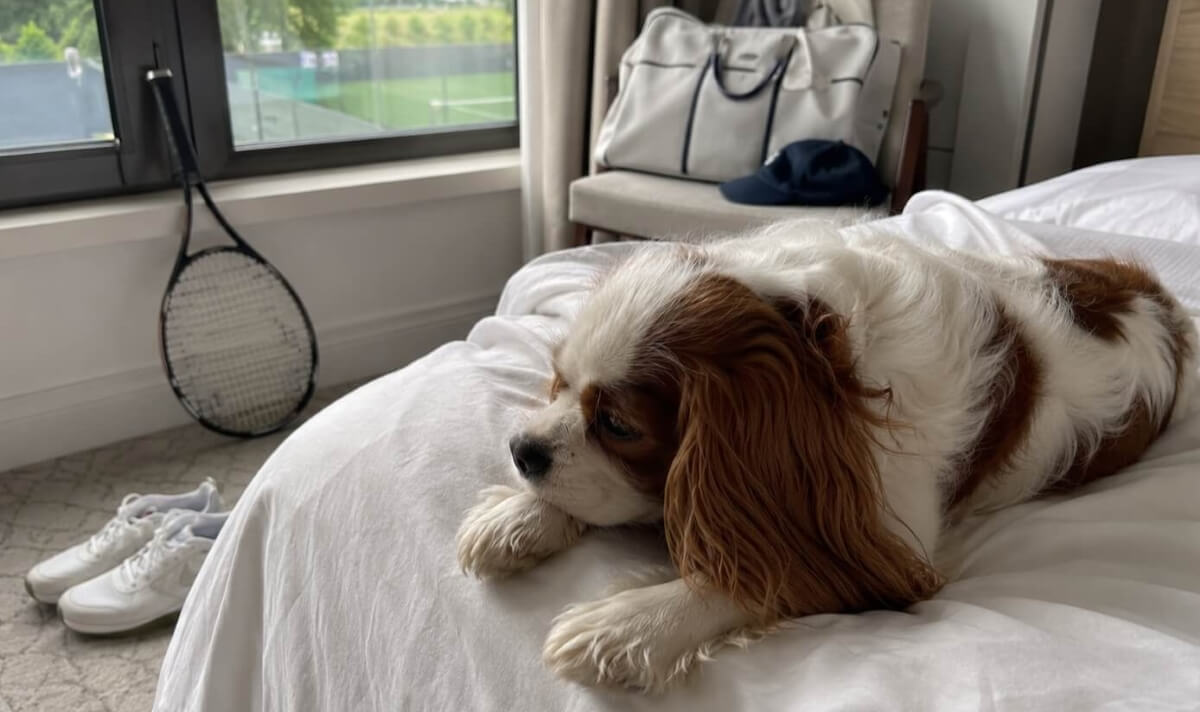
That became a surprisingly charming off-court storyline this week when Aryna Sabalenka asked Wimbledon to let players bring their dogs inside. Sabalenka travels with Ash, her Cavalier King Charles Spaniel puppy, and her request was direct: let the dogs in. Reuters reported that Wimbledon allows service dogs and certified assistance dogs on the grounds, but not pet dogs.
Which means Ash, despite being fluffy, beloved, and apparently very well behaved, does not make the cut.
By contrast, the French Open recently went in the opposite direction. At Roland Garros, players’ dogs became part of the scene, with official pet accreditations and even a dog concierge service for players traveling with their pets.
Wimbledon is not there yet, and the hesitation makes sense. A Grand Slam is not a quiet living room. It is a crowded, high-pressure, carefully managed event where small decisions can quickly become big systems. Letting players bring dogs would mean thinking through safety, access, staff, animal stress, allergies, noise, and how to make the rule fair for everyone.
A “just one dog” policy also becomes complicated fast. One dog becomes five. Five becomes twenty. Some dogs might be perfectly calm; others might be overwhelmed by crowds, cameras, unfamiliar spaces, and long tournament days. Even a dog-friendly idea still needs a very practical plan.
The softer side of the Wimbledon debate
That is what makes Sabalenka’s request interesting. It is not really about one puppy getting a special pass at the gate. It is about the small routines athletes use to feel steady during a year that can look like airports, hotels, practice courts, pressure, and repeat.
Sabalenka has described walking Ash as a kind of meditation, which makes perfect sense to dog people. Sometimes the brain is loud, the schedule is brutal, and the dog still needs to sniff the same patch of grass for 90 seconds. That can help.
There is also a very Wimbledon twist to all of this: the grounds are not exactly animal-free. The Guardian reported that security and guide dogs even have access to a dog paddling pool and toilet area behind Henman Hill. Rufus the Hawk is still part of Wimbledon’s long-running bird-control operation, too.
So the line at Wimbledon is not simply animals or no animals. It is animals with an official role and pets that make life on tour feel a little more like home.
For now, Ash is in the second category. He is not there to work the grounds or help manage the venue. His job is quieter, and much harder to put on a credential: being the familiar little creature who makes a hard week feel softer.
Wimbledon may keep its rule exactly as it is. But Ash has already made his case: sometimes the smallest member of the team is the one waiting back at the hotel.
Sources: Reuters and The Guardian.


