
Life With Dogs
Summer Is Ending. Your Dog Has Not Been Briefed.
Earlier mornings, quieter houses and fewer people around can change your dog’s day almost overnight. Here’s how to make the fall reset a little easier.
Summer has a way of quietly rewriting a dog’s schedule.
Mornings start later. Someone is home more often. Walks stretch into the evening. There are visitors, road trips, backyard afternoons, children drifting in and out of rooms and considerably more opportunities to investigate what everyone is eating.
Then the end of August arrives and the household snaps back into formation.
School starts. Work schedules tighten up. Alarm clocks move earlier. The house that has been pleasantly chaotic at 11 a.m. is suddenly empty. Your dog has no idea what September is, but they are very good at noticing that breakfast moved, the morning walk got shorter and everyone disappeared at once.
The fall reset
The goal is not to preserve summer forever. It is to make the new version of the day predictable enough that your dog knows what comes next.
Your calendar changed. Your dog’s world changed with it.
Dogs tend to do well when everyday life has some consistency. Meals, walks, play, rest and the familiar rhythm of people leaving and coming home all help make the day predictable. When several of those things change at once, some dogs adjust easily. Others may need a little more time.
A quieter house does not automatically mean your dog will struggle. Many simply nap more and settle into the new routine. But if your dog starts pacing, panting, barking for long periods or trying to escape after everyone leaves, that is a different situation. For most dogs, the best place to start is simple: change the routine gradually, keep important things like walks and meals consistent, and give them something familiar and engaging to do while the house is quiet.
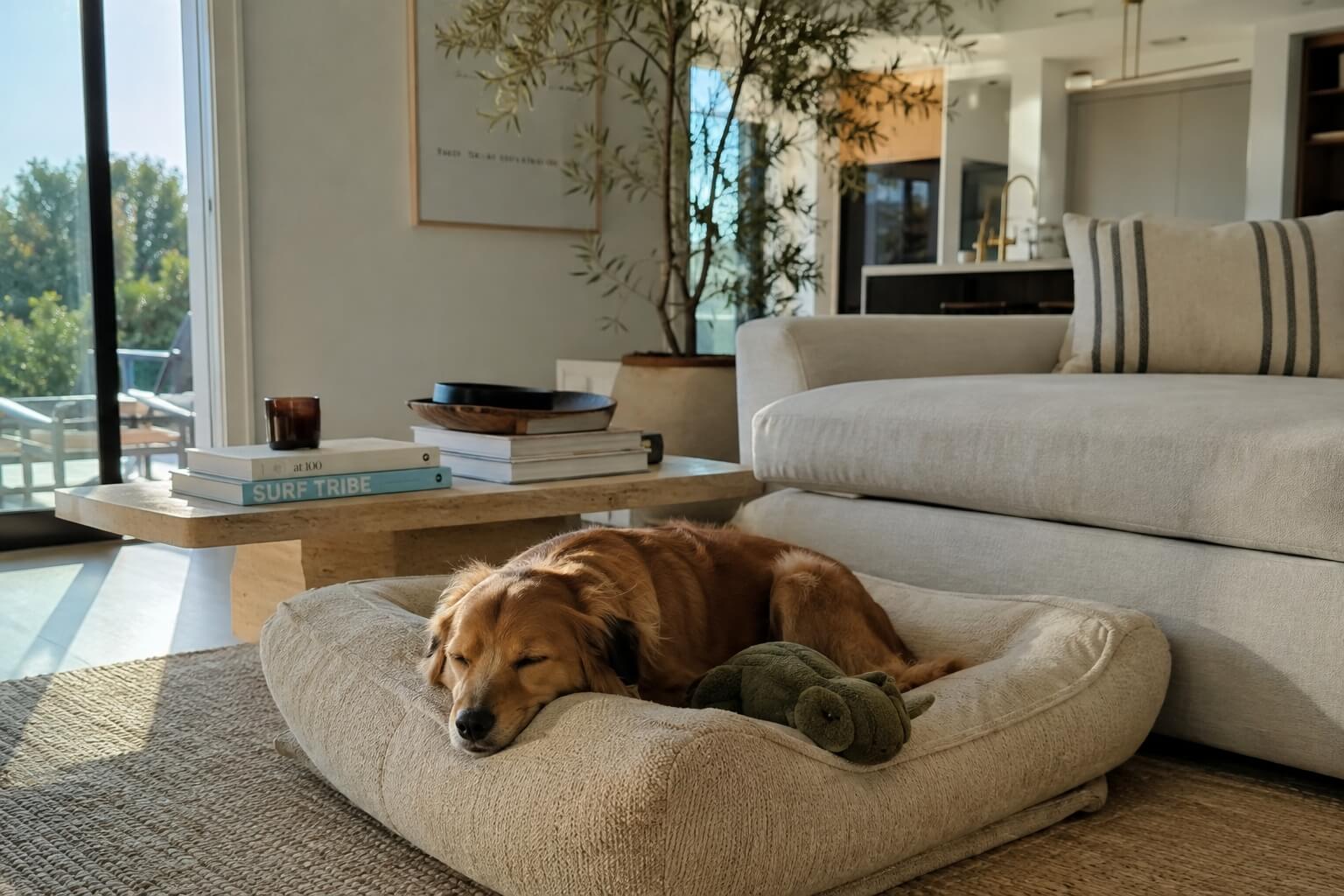
Start before Monday morning
Give your dog a seven-day head start
If you know the household schedule is about to change, do not wait for the first busy morning to introduce everything at once. Start moving the pieces a few days beforehand. The exact timetable matters less than making the transition feel less like summer vanished overnight.
7–5 days before
Move the anchors first.
Begin shifting wake-up time, breakfast and the morning walk toward the schedule you’ll actually follow. If lunch or dinner will change too, move those gradually as well instead of changing the whole routine at once.
4–3 days before
Practice the quiet part.
If your dog has spent most of summer with someone nearby, start practicing short periods alone before the new routine begins. Keep them brief and easy at first, then gradually make them a little longer if your dog is staying relaxed.
2–1 days before
Run the real morning.
Get up at the new time, take the kind of morning walk you’ll realistically have time for, serve breakfast on the new schedule and let the house settle afterward. Think of it as a dress rehearsal, except one member of the cast has no idea there’s a rehearsal.
Before everyone leaves
Protect the part of the morning your dog actually needs
The morning walk is often one of the first things to shrink when the household gets busier. A relaxed summer walk can quickly turn into a rushed trip outside before everyone heads out the door.
Try to protect a little of that time. A walk, play session or other appropriate activity gives your dog a chance to move, sniff, go to the bathroom and spend some time with you before the house gets quiet. The goal is not to tire them out completely, just to give the day a calmer, more satisfying start.
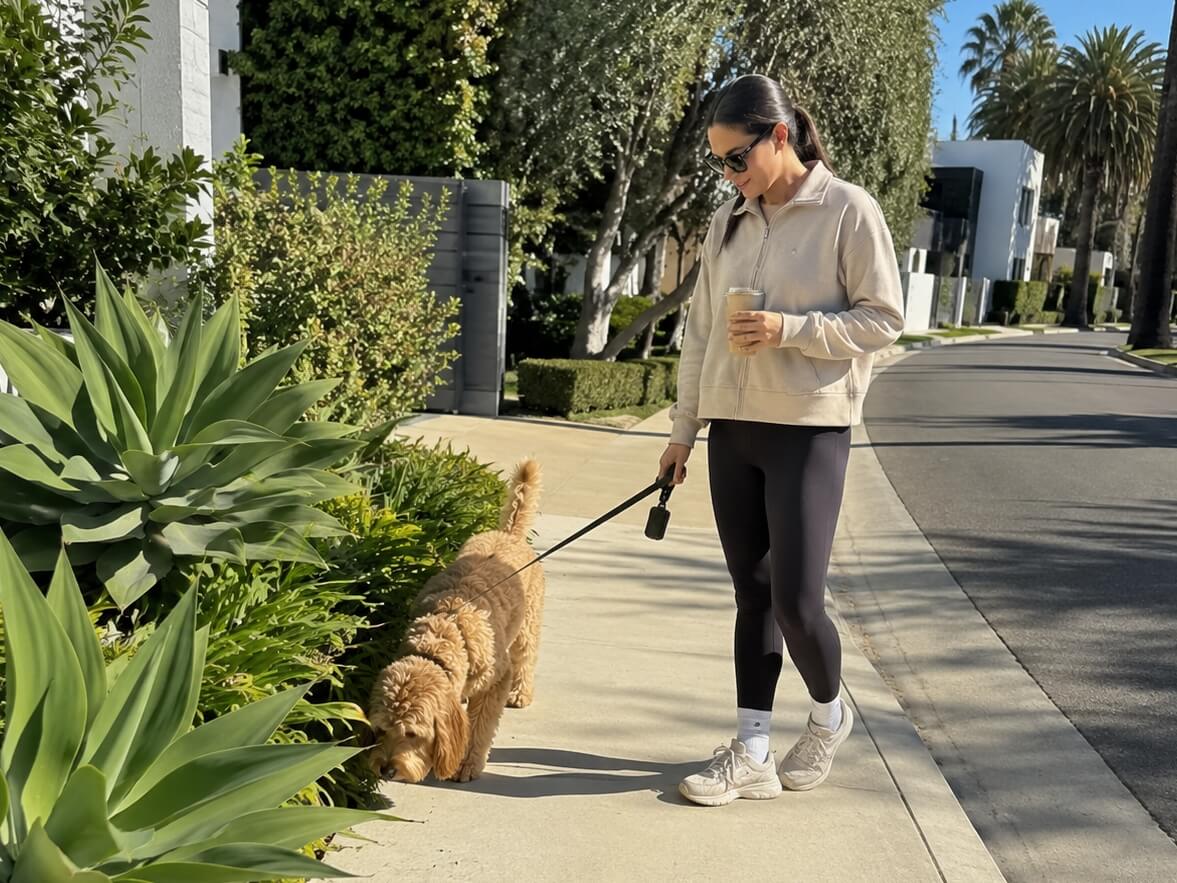
The realistic morning check
• Enough time to go to the bathroom without rushing
• Some movement or play appropriate for your dog
• A little sniffing rather than only marching
• Fresh water and a calm place to settle afterward
After the door closes
Make the quiet house a little more interesting
Summer naturally gives dogs more to notice. Someone opens the refrigerator. A delivery arrives. People move from room to room. There is a trip outside, a visitor at the door or at least something happening in the kitchen worth keeping an eye on.
When the house suddenly gets much quieter, a little planned enrichment can help fill that gap. A food puzzle, stuffed food toy or another familiar activity can give your dog something to focus on as they settle in. Stick with options you already know they can use safely when nobody is there to supervise.
Build a small rotation
Monday: breakfast in a food puzzle
Tuesday: a familiar stuffed food toy
Wednesday: part of breakfast scattered for an easy sniff-and-find game
Thursday: a favorite enrichment toy your dog already uses safely
Friday: whatever earned the best reviews earlier in the week
Keep departures calm and predictable
Dogs quickly learn the little signals that mean you are about to leave: shoes going on, keys being picked up, a work bag by the door. For some dogs, those cues are simply part of the routine. For others, they can become the moment when worry starts.
If your dog is already comfortable being home alone, there is no need to turn every departure into a big emotional event. Keep the routine simple: give them their usual safe enrichment, say goodbye normally and head out. But if your dog starts pacing, panting, whining or becoming visibly anxious before you have even left, that is a sign to look more closely at how they are coping with alone time.
The midday question
How long can your particular dog comfortably be home?
Age, health, bathroom needs and how comfortable your dog is being alone all matter. If the new routine leaves them home for longer than they can comfortably handle, the solution may be practical rather than behavioral: a dog walker, trusted neighbor, pet sitter, daycare on selected days or someone coming home at lunch.
Watch what happens
Bored, unsettled or genuinely distressed?
Not every chewed tissue or restless afternoon means something is wrong. Many dogs need a little time to adjust to a quieter house. The important question is what happens after you leave: does your dog eventually relax, lie down and sleep, or do they stay visibly anxious and unable to settle?
More likely adjusting normally
Your dog engages with the enrichment you leave, moves around normally, eventually settles and sleeps, and otherwise behaves much like themselves.
Worth a closer look
Persistent barking, howling or whining after you leave
Pacing, panting, drooling or visible agitation
Destruction concentrated around doors or windows
Repeated escape attempts
House-soiling that appears specifically around being left alone
Useful trick: if you are unsure what happens after you leave, a pet camera can show you something the state of the living room cannot: whether your dog settled five minutes later or spent the next hour struggling.
If your dog is panicking, repeatedly trying to escape, hurting themselves or showing a consistent pattern of intense distress when left alone, start with your veterinarian. At that point, the problem may need a more deliberate behavior plan rather than simply more practice with the new routine.
Keep one good thing
The fall schedule does not have to erase summer completely
Maybe the long weekday afternoons together are gone. That is fine. Keep the evening sniff walk. Protect ten minutes of backyard play before dinner. Make Saturday morning the long walk. Hold on to one or two routines your dog already knows and enjoys.
Dogs do not need every day to look exactly the same. But keeping a few familiar parts of the day can make a new schedule easier to understand — and a lot less abrupt.
The Fetch takeaway
Do not wait until the house suddenly empties to change your dog’s entire day. Move the routine gradually, preserve the parts that matter and pay attention to how your dog actually handles the quiet.
Summer ending does not mean your dog’s good life has to end with it. They probably do not need the entire household available for spontaneous entertainment from breakfast until dinner.
They just need the new version of the day to make sense.
Sources & further reading
American Kennel Club: Preparing Dogs for Back-to-School Time
American Kennel Club: How to Change Your Dog’s Routine
Cornell University College of Veterinary Medicine: Anxious Behavior in Dogs
This article provides general dog-care and behavior information and is not a substitute for veterinary advice.


