
The Dog Stuff Cleaning Guide
Your dog’s bed probably gets washed when it starts looking like it needs it. The water bowl gets topped up. The toys... eventually have their day. And the favorite stuffed animal has survived the yard, the car, several naps and things nobody would like formally identified.
But there is actually a recommended cleaning schedule for many of the things dogs use every day — and it is much simpler than trying to decide whether something has officially failed the sniff test.
The short version
Food bowls: after use.
Water bowls: daily.
Bedding: weekly.
Toys: about monthly.
The CDC provides suggested cleaning schedules for common pet supplies, while the FDA has additional recommendations for feeding bowls and utensils. Put the guidance together and you get a household routine that is realistic, easy to remember and considerably more useful than waiting until something starts to smell suspicious.
The Cheat Sheet
Dog-supply cleaning schedule
Think of these as useful household baselines, not appointments you have to keep with a calendar. If something is visibly dirty, smells bad or has had an unusually eventful afternoon, clean it sooner.
Food bowls: how often to wash them
If there is one item on this list likely to inspire an immediate walk toward the kitchen, it may be the food bowl.
The FDA recommends washing pet food bowls and scooping or measuring utensils with soap and hot water after each use. The CDC gives a slightly different minimum for dry food bowls — daily rather than after every serving — while recommending cleaning after every use for wet food.
If you want one rule instead of two, washing the food bowl after meals is the easiest one to remember. With wet food it already feels obvious. With kibble, the bowl may contain little more than three crumbs and a lick mark, which makes “I’ll just refill it” extremely tempting. Keeping two dishwasher-safe bowls in rotation makes the habit almost effortless.
Water bowls: why daily cleaning matters
Water bowls spend all day looking like one of the cleanest things your dog owns, which makes them particularly easy to simply top up and move on.
Both the CDC and FDA recommend cleaning them daily. That makes more sense when you remember that your dog drinks from that bowl with the same mouth that carried a tennis ball, inspected the sidewalk and conducted an unsolicited review of something behind a shrub.
Instead of continuously topping up yesterday’s water, empty the bowl, wash it and refill it. Attach the job to something you already do — breakfast, dinner or the first water refill of the morning — and it quickly stops feeling like another chore.
Dog beds, blankets and crates: the weekly routine
The CDC’s example schedule puts pet beds, blankets and habitats on a weekly cleaning cycle — perhaps unwelcome news if your dog’s bed involves an enormous foam insert, an awkward zipper and a reconstruction process requiring both patience and upper-body strength.
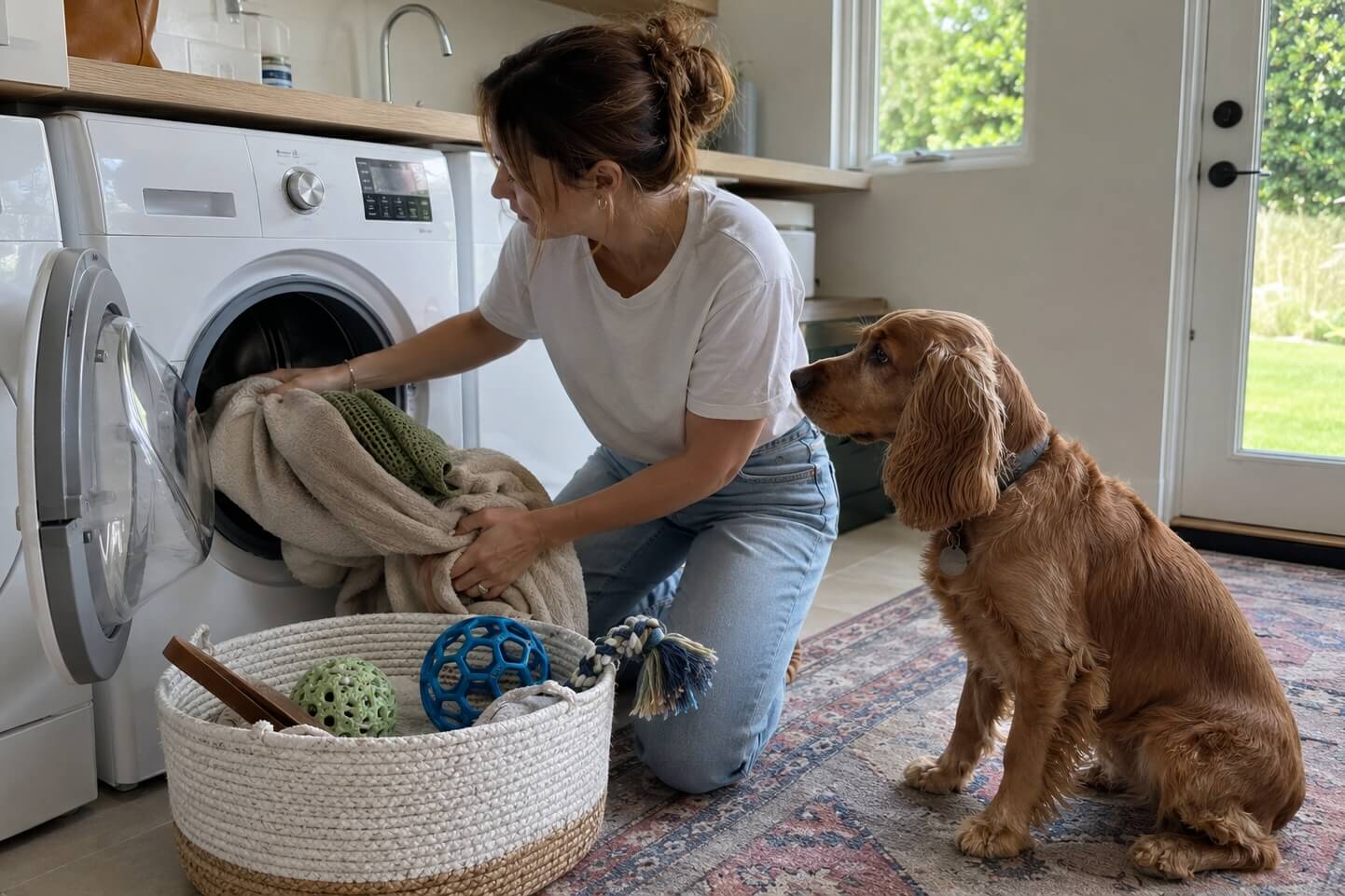
Washable covers and blankets can make the weekly dog-bed reset much easier.
These are also the places where outside dirt, hair, drool and everyday dog life quietly accumulate. Between washes, removing loose hair and shaking out blankets can help keep the sleeping area fresher.
The crate counts too. Wash the bedding, remove trapped hair and debris, and clean the tray or dirty surfaces. If your dog has also claimed the couch throw, bedroom bed and the blanket you once believed was decorative, rotate them through the laundry rather than trying to clean the entire canine property portfolio on Sunday morning.
Dog toys: how often to clean them
Good news for anyone currently looking nervously at the toy basket: the CDC’s general cleaning schedule for pet toys is about once a month.
But “monthly” is a baseline, not diplomatic immunity. A plush squirrel soaked in slobber, a rope toy that spent the afternoon in wet grass or a ball that rolled through something unmentionable has already volunteered for cleaning duty.
Follow the care instructions for the individual toy. Hard rubber and plastic items can often be cleaned with soap and water, and dishwasher-safe items can go through the dishwasher. Washable soft toys can usually join the laundry when their materials allow it.
One useful exception
Food puzzles, lick mats and enrichment toys
A stuffed rubber toy, lick mat or food puzzle may technically live in the toy basket, but once dinner or peanut butter goes inside it, treat it more like feeding equipment.
Clean out food residue after use according to the manufacturer’s instructions. And yes, that includes the tiny grooves where yesterday’s snack likes to establish permanent residency.
The supporting cast
Five dog items that are easy to forget to clean
Bowls and beds eventually demand attention. These smaller items are remarkably good at disappearing into the background.
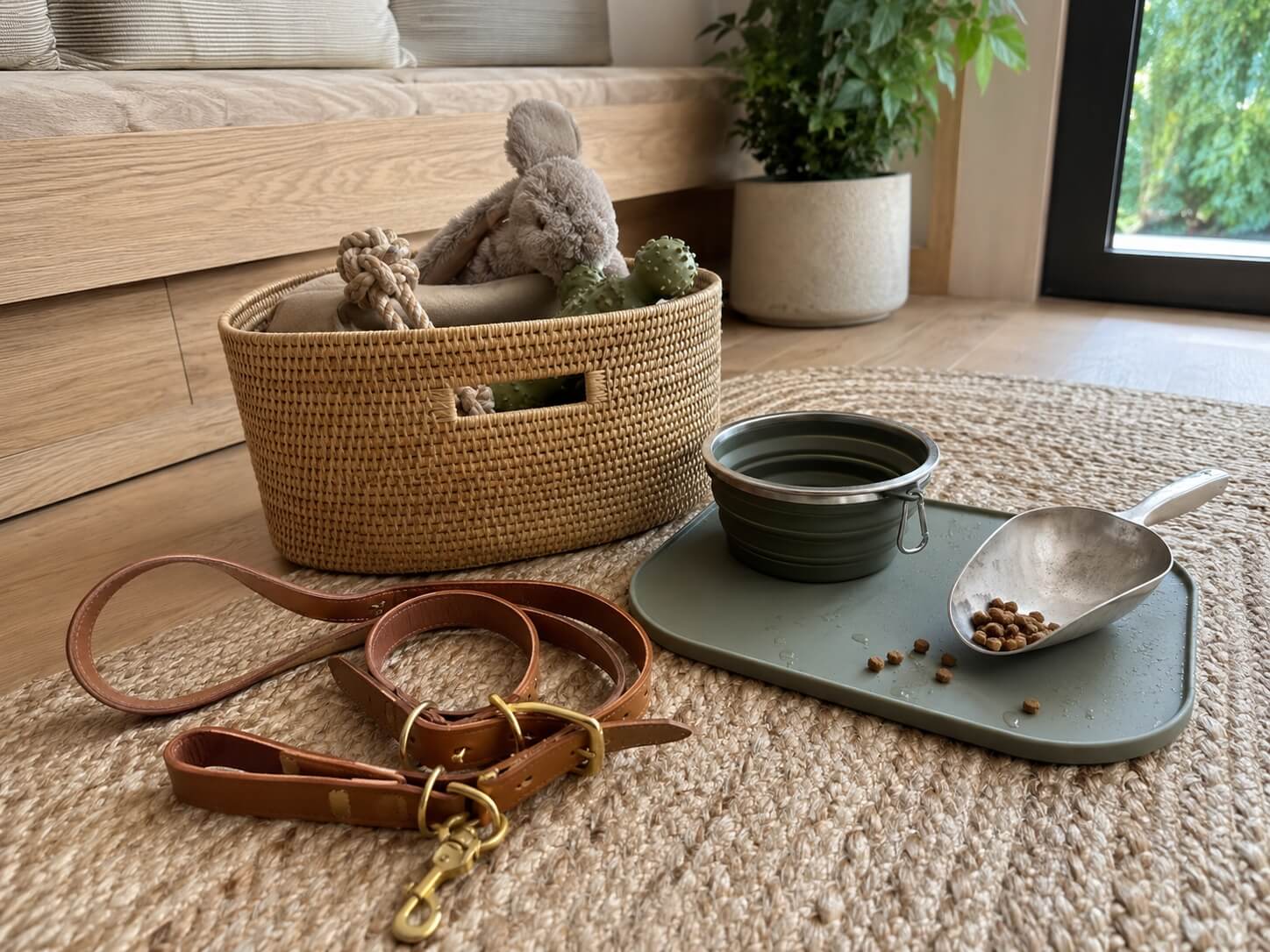
The smaller everyday items are often the easiest ones to forget.
| 01 | The food scoop. The FDA recommends washing scooping and measuring utensils after use and keeping them specifically for pet food. The scoop that has lived inside the kibble bin since June deserves a little attention too. |
| 02 | The feeding mat. Pick it up occasionally. Water, crumbs and enthusiastic eating have an impressive ability to travel underneath. |
| 03 | The travel bowl. Parks, patios, road trips and hotel floors happen, then the bowl quietly folds back into the dog bag as though it spent the day at home. |
| 04 | The crate tray. A fresh blanket on top does not automatically make the hair, crumbs and dirt underneath disappear. |
| 05 | The toy basket itself. Once you’ve removed the toys for their monthly clean, it is an excellent time to deal with the layer of hair, crumbs and mysterious debris at the bottom. |
Collars, harnesses and leashes: when to wash them
This is one place where an internet cleaning schedule can become less useful.
The CDC recommends cleaning pet supplies regularly and cleaning them sooner when they are dirty or smelly, but it does not prescribe a universal “wash your dog’s harness every seven days” rule.
That makes sense. A harness worn for three dry neighborhood walks has had a very different week from one that encountered rain, beach sand, creek water and one spectacular roll in something nobody invited home. Let condition decide, and follow the manufacturer’s care instructions because nylon, padded fabric, leather and coated gear may need different treatment.
When to clean dog supplies sooner
The routine works until dog life happens. Dirt and contamination always get the deciding vote.
Don’t wait for cleaning day if:
• An item is visibly dirty or smells bad
• Food residue is sitting in a bowl, mat or enrichment toy
• Urine or feces has contaminated it
• Your dog is sick or your veterinarian has given you a more frequent cleaning plan
Worth knowing
Cleaning vs. disinfecting dog supplies
Your dog’s belongings do not need to become an operating room. The CDC distinguishes ordinary cleaning — physically removing dirt and germs with soap or detergent — from disinfecting, which uses chemicals to kill germs.
For most everyday pet supplies, routine cleaning is usually enough. Disinfection becomes more important after contamination with urine or feces, during illness or in households where a person or pet is more vulnerable to serious illness from germs. If you do use a disinfectant, follow its label carefully and keep your dog away until the item is safe and dry as directed.
Make it automatic
A simple dog-supply cleaning routine
You do not need another elaborate household schedule. Attach each job to something already happening and most of this takes care of itself.
The easy routine
✓ After meals: wash the food bowl and feeding utensils.
✓ Every day: wash and refill the water bowl.
✓ On laundry day: add dog blankets and washable bed covers.
✓ Once a month: empty the toy basket and clean what can be cleaned.
✓ After messy adventures: inspect the collar, harness, leash and travel gear.
The goal is not a spotless dog household. Such a place may not exist.
It is simply to stop the water bowl, favorite blanket and beloved plush squirrel from becoming household fixtures that everyone sees every day and nobody quite remembers to wash.
Sources & further reading
CDC: Cleaning and Disinfecting Pet Supplies
This article is for general educational purposes. Follow manufacturer care instructions, and ask your veterinarian about cleaning or disinfection needs during illness or when extra precautions may be appropriate.


